
Behind the Magic: Inside a Boutique Guitar Factory
· Wolf
Overview
Boutique guitar factories focus on artisanal craftsmanship, producing high-quality, unique instruments with personal touches and custom options. Each guitar is made from carefully selected woods and undergoes meticulous processes, from shaping to finishing, ensuring superior sound and playability. The rise of boutique guitars offers musicians distinctive tones and personalized experiences, making them a favored choice over mass-produced alternatives.
Table of Contents
- The Boutique Guitar Revolution
- Why Choose a Boutique Guitar?
- A Day in the Life of a Boutique Guitar Factory
- Wood Selection
- Preparation of Materials
- Shaping the Body
- Neck Design and Assembly
- Truss Rod Installation
- Fingerboard and Fretting
- Pickups and Electronics
- Wiring and Setup
- Finishing Touches
- Quality Control
- Private Label Guitar Production: A Growing Trend
- The Benefits of Private Labeling
- Final Strums: The Passion Behind Craftsmanship
Key Takeaways
- Custom Options: Boutique guitar manufacturers offer personalized choices in wood types, finishes, and hardware, allowing musicians to create a tailored instrument.
- Quality Materials: High-quality, sustainable woods are used in boutique guitars, enhancing tonal richness and resonance.
- Handcrafted Excellence: Meticulous attention to detail ensures superior build quality, resulting in durable instruments.
- Unique Sound Profiles: Each boutique guitar has its own distinct voice, appealing to musicians seeking signature tones.
- Rigorous Quality Control: Every guitar undergoes extensive testing for setup, playability, and sound before leaving the factory.
- Private Label Production: Boutique manufacturers can create custom-branded guitars for retailers or musicians, offering unique signature models.
- Artistry and Passion: The craftsmanship in boutique guitar production reflects the dedication and artistry of luthiers, making each instrument a unique work of art.
Welcome to the heart of crafting sound, where artistry meets precision: the boutique guitar factory. In this journey, we’ll unveil the intricate processes and passionate craftsmanship that go into creating one-of-a-kind instruments. From selecting the finest woods to the final setup, each step in the boutique guitar production process is essential to delivering a versatile electric guitar that resonates with musicians at all levels. If you’re curious about how these exquisite instruments are made and what makes boutique guitars stand out, read on!
The Boutique Guitar Revolution
In recent years, boutique guitars have gained immense popularity among musicians seeking unique tones and custom craftsmanship. Unlike mass-produced guitars, boutique guitars are made with a personal touch, often produced in small batches to ensure quality and attention to detail. This dedicated approach results in instruments that not only play beautifully but also look stunning, setting them apart in a market flooded with standard guitar options.
Why Choose a Boutique Guitar?
Choosing a boutique guitar is about more than just the instrument itself. It’s about the experience, the story behind it, and the passion of the luthiers who craft each piece. Here are some compelling reasons why guitarists are turning to boutique production:
- Custom Options: Many boutique guitar manufacturers allow you to choose everything from the wood types to the finish and hardware, creating a versatile electric guitar tailored to your preferences.
- Quality Materials: Boutique factories often utilize high-quality, sustainable woods that enhance tonal richness and resonance.
- Handcrafted Excellence: The meticulous attention to detail in boutique production results in superior build quality, leading to instruments that can last a lifetime.
- Unique Sound Profiles: Each boutique guitar has its own voice, influenced by the materials, craftsmanship, and design, making them appealing to serious musicians seeking signature tones.
A Day in the Life of a Boutique Guitar Factory
So, what's it like inside a boutique guitar factory? Let’s take a look at the different stages involved in the production of these stunning instruments.
Wood Selection
The journey of a versatile electric guitar begins with sourcing the right woods. Luthiers carefully select tonewoods, which can include mahogany, maple, rosewood, and alder, among others. Each wood type has unique properties that influence the instrument's sound and feel. Luthiers often travel to forests to hand-pick their materials, ensuring only the best quality goes into their guitars.
Preparation of Materials
Once the wood is selected, it undergoes several preparation processes. This includes drying, cutting, and shaping the woods into their desired forms. Each piece is meticulously measured, with attention paid to weight, density, and grain patterns, factors that directly impact sound quality.
Shaping the Body
The next step is shaping the guitar body. Luthiers use both hand tools and machines to sculpt the wood into an ergonomic form that balances aesthetics with playability. This stage involves intricate carving to create contours that are comfortable for musicians, ensuring that the guitar feels just as good as it looks.
Neck Design and Assembly
The neck is one of the most crucial aspects of a guitar, playing a significant role in its overall playability. In boutique factories, the neck construction often uses a combination of traditional and innovative approaches to strike the right balance between stability and flexibility.
Truss Rod Installation
The truss rod is an integral part of guitar neck construction, allowing for adjustments in the neck’s curvature. This is essential for maintaining optimal action and preventing fret buzz. High-quality boutique guitars often use dual-action truss rods that allow for more extensive adjustments, ensuring that the versatile electric guitar performs perfectly for any playing style.
Fingerboard and Fretting
After the neck is shaped, the fingerboard is installed. This is typically made from rosewood or ebony, providing a smooth playing surface. The frets are meticulously installed, leveled, and polished to perfection, ensuring a premium playing experience. Luthiers often take extra care to ensure that each fret is perfectly dressed, offering precise intonation across the entire fretboard.
Pickups and Electronics
Once the body and neck are assembled, it’s time to install the pickups and electronics. The choice of pickups plays a significant role in determining the guitar's tonal characteristics. Boutique manufacturers often use high-quality, custom-wound pickups designed specifically to complement the guitar's body and construction.
Wiring and Setup
After the pickups are installed, the wiring process begins. This step involves intricate work to connect the electronics, ensuring everything functions smoothly and reliably. A well-set-up guitar will have the correct action, intonation, and pickup height, making it ready to play straight out of the box.
Finishing Touches
The final stage in boutique guitar production is the finishing process. This can include staining, polishing, and applying protective coats. Each finish not only enhances the aesthetic appeal but also affects the overall tonal quality. A high-gloss finish may offer a bright sound, while a matte finish might provide a warmer, more nuanced tone.
Quality Control
Before any guitar leaves the factory, it undergoes rigorous quality control testing. This includes checking the setup, playability, and sound. Luthiers perform final adjustments, ensuring that every aspect meets their high standards for performance and craftsmanship.
Private Label Guitar Production: A Growing Trend
In addition to creating their own original designs, many boutique manufacturers engage in private label guitar production. This allows them to provide custom-branded instruments for retailers or musicians seeking a unique signature model.
The Benefits of Private Labeling
Private label guitar production offers several advantages:
- Brand Customization: Musicians and retailers can have guitars designed to align with their brand's identity, resulting in a product that resonates with their target audience.
- Quality Assurance: Boutique factories provide a guarantee of craftsmanship and quality that mass-production facilities often can’t match.
- Unique Offerings: Musicians can create signature models that differ from standard offerings, providing uniqueness and appeal in a crowded market.
Final Strums: The Passion Behind Craftsmanship
The journey through a boutique guitar factory reveals the dedication and artistry that goes into creating these instruments. From the selection of beautiful woods to the careful assembly and finishing, each step is a testament to the passion of the luthiers. The result is more than just a versatile electric guitar; it’s a work of art that embodies the spirit of music itself. When you invest in a boutique guitar, you're not just purchasing an instrument, but a piece of craftsmanship that will inspire creativity and joy for years to come.
So the next time you pick up your guitar, consider the story behind its creation. Every strum echoes the hard work and love that went into making it. Whether you’re a seasoned player or just starting, a boutique guitar can elevate your musical journey to new heights!
Frequently Asked Questions
1. What is a boutique guitar?
2. Why should I consider buying a boutique guitar?
3. What materials are used in the production of boutique guitars?
4. How does the crafting process of boutique guitars differ from mass-produced ones?
5. What is private label guitar production?
Glossary
| Term | Meaning |
|---|---|
| Boutique Guitar | A high-quality, handcrafted guitar made in small batches. |
| Luthier | A craftsman who builds and repairs stringed instruments. |
| Tonewood | Wood used in guitar construction, chosen for its sound properties. |
| Truss Rod | A metal rod in the neck that adjusts curvature for playability. |
| Pickup | A device that captures string vibrations and converts them to electrical signals. |
| Fretboard | The part of the neck where the frets are located, allowing for note playing. |
| Quality Control | The process of ensuring each guitar meets performance and craftsmanship standards. |
| Private Label | Custom-branded guitars made for retailers or musicians. |
| Finishing | The final process that enhances appearance and affects tonal quality. |
| Action | The height of the strings above the fretboard, affecting playability. |
Linked Product
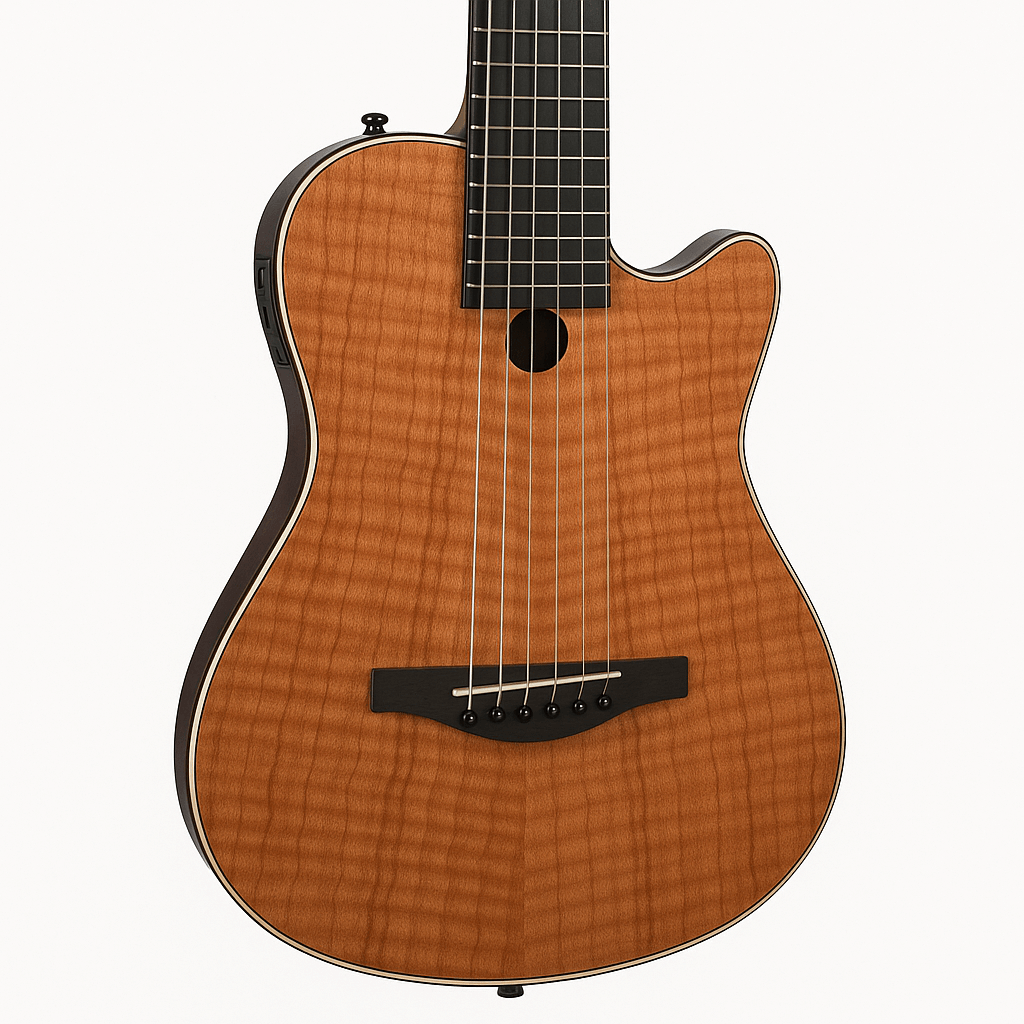
Mythic Phantom ES2 Electric Guitar – Chambered Semi Hollow Body – Flame Maple Top – USA Built
The Mythic Phantom ES2 Electric Guitar features a thinline chambered semi-hollow body and a flame maple top, providing a blend of acoustic warmth and electric clarity. Its professional-grade expression system and set-neck construction enhance versatility, making it suitable for various playing styles including rhythm, lead, and ambient music. Built in the USA with premium tonal woods, the Phantom ES2 ensures balanced sound quality and dynamic responsiveness.
View Product