
The Evolution of Guitar Design: From Standard to Custom
· Wolf

Overview
The blog explores the evolution of guitar design from medieval instruments to modern electric guitars, highlighting the significance of small batch production and customization in today's music scene. It emphasizes how craftsmanship and technology have merged to create personalized instruments, allowing musicians to express their unique styles. The Mythic Phoenix Electric Guitar is showcased as an example of this innovation, reflecting the future of guitar design that combines artistry with sustainability.
Table of Contents
- The Historical Roots of Guitar Design
- From Acoustic Beginnings to Electric Innovations
- The Search for Individuality
- Craftsmanship Meets Technology
- The Role of Custom Guitars in Today's Music Scene
- The Art of Personalization
- Exploring the Mythic Phoenix Electric Guitar
- The Impact on Musicianship
- The Future of Guitar Design
- Embracing Change and Tradition
- Endless Possibilities Await
Key Takeaways
- Historical Evolution: The guitar's design has evolved from medieval instruments like the lute to modern electric guitars, showcasing centuries of innovation.
- Electric Revolution: The introduction of solid-body electric guitars in the 1930s marked a pivotal change, enabling greater sustain and shaping genres like rock 'n' roll.
- Custom Builds: The late 20th century saw a rise in custom guitars, allowing musicians to personalize their instruments for unique expression.
- Material Innovation: Modern luthiers are integrating advanced materials such as carbon fiber, enhancing durability while preserving sound quality.
- Mythic Phoenix Electric Guitar: This model exemplifies the fusion of artistry and technology in small batch production, offering exceptional tonal quality and aesthetic appeal.
- Personalization Features: Custom guitars allow musicians to select specific pickups, finishes, and hardware, deepening their connection to the instrument.
- Future Trends: Sustainability and technological advancements are set to influence future guitar designs, focusing on eco-friendly materials and practices.
The guitar has a storied history that dates back centuries, evolving from simple string instruments to the sophisticated designs we see today. Understanding this evolution not only illuminates how much the craft of luthiery has changed but also highlights the passion and innovation that have led to the birth of iconic models. In this blog, we will take you on a journey through time, exploring the significant milestones in guitar design as well as the growing trend of small batch guitar production, including the exceptional Mythic Phoenix Electric Guitar.
The Historical Roots of Guitar Design
Guitar design has roots dating back to the medieval period. The earliest instruments that resemble guitars were the lute and vihuela. These instruments featured rounded bodies and necks, but they had a limited range of tonal capabilities. As music genres expanded, so too did the need for more adaptable instruments that could accommodate a variety of playing styles and musical expressions.
From Acoustic Beginnings to Electric Innovations
The transition from acoustic to electric guitars in the early 20th century marked a significant turning point in guitar design. Early electric guitars were simply amplified versions of their acoustic counterparts, but as musicians sought more volume and control, manufacturers began to experiment with new shapes and electronic components.
- The Birth of the Electric Guitar: In the 1930s, pioneers such as Rickenbacker and Gibson introduced solid-body electric guitars. These instruments allowed for greater sustain and feedback, paving the way for rock ‘n’ roll.
- Iconic Designs: The Fender Stratocaster and Telecaster emerged in the 1950s, with their unique shapes and versatile sounds quickly becoming favorites among musicians. The sleek contour of the Stratocaster was designed for both comfort and playability.
The Search for Individuality
As music evolved, so did the desire among musicians to innovate and personalize their instruments. The late 20th century saw designers embracing custom builds that allowed for individual expression. The rise of small batch guitar production became a game-changer, allowing luthiers to focus on quality over quantity.
Craftsmanship Meets Technology
The synthesis of traditional craftsmanship and modern technology led to new design possibilities. Luthiers began integrating advanced materials, such as carbon fiber and engineered woods, into their builds, enhancing durability while maintaining acoustic integrity. This fusion paved the way for guitars that not only looked stunning but delivered superior sound quality.
The Role of Custom Guitars in Today's Music Scene
As music styles diversified, so did the need for customized instruments. Today, artists are no longer confined to standard models; they can craft their dream guitars tailored to their unique sound and aesthetic preferences. This is where brands like Mythic Guitars shine, offering small batch production that emphasizes quality, attention to detail, and the artistry of lutherie.
The Art of Personalization
Custom guitars often incorporate features that align with a musician's personal style. From unique finishes and inlays to custom pickups and hardware, the possibilities are endless. This personalization aspect resonates deeply with artists, enabling them to connect with their instrument on a more profound level, ultimately enriching their performance.
- Tonal Preferences: Musicians can choose pickups tailored to their desired sound, whether it be vintage warmth or modern clarity.
- Aesthetic Choices: Custom finishes, unique woods, and personalized engravings enhance the visual appeal, blending functionality with artistry.
Exploring the Mythic Phoenix Electric Guitar
One shining example of this evolution in customization and quality is the Mythic Phoenix Electric Guitar. Crafted with meticulous attention to detail, this model represents the high level of artistry found in small batch guitar production. The Mythic Phoenix not only boasts an impressive tonal palette but is also a visual masterpiece, combining ergonomic design with aesthetic beauty.
The Impact on Musicianship
With custom instruments like the Mythic Phoenix Electric Guitar readily available, musicians can explore their creativity without barriers. The freedom to modify elements such as neck profile, pickup configuration, and even body shape allows artists to delve deeper into their musical identities. This level of customization transforms not just the instrument but also the entire approach to music-making.
The Future of Guitar Design
As we look ahead, the future of guitar design is poised for even greater innovation. Factors such as sustainability and technological advancements will play significant roles in shaping how guitars are made. We can expect to see continued exploration of eco-friendly materials and practices that benefit both the environment and the musicians who rely on these instruments.
Embracing Change and Tradition
While the industry always seeks the next big innovation, the heart of guitar design will always lie in the bond between the musician and their instrument. The storytelling aspect of guitars—how they become an extension of the player—is unlikely to change. In fact, this connection to artistry and craftsmanship is what keeps the legacy of guitar design alive.
Endless Possibilities Await
The journey of guitar design is a tapestry woven with tradition, creativity, and innovation. Each evolution reflects the changing landscape of music and the enduring spirit of guitarists who seek to express themselves through their instruments. As we embrace the future, whether it’s through small batch guitar production with brands like Mythic Guitars or the latest technological advancements, the possibilities are limitless. Your dream guitar awaits, and it's time to make that dream a reality!
Frequently Asked Questions
1. What is the historical background of guitar design?
2. How did electric guitars change the landscape of music?
3. What are the benefits of custom guitars?
4. What is the Mythic Phoenix Electric Guitar known for?
5. What does the future hold for guitar design?
Glossary
| Term | Meaning |
|---|---|
| Guitar | A stringed musical instrument played by plucking or strumming. |
| Luthier | A craftsman who builds and repairs stringed instruments. |
| Electric Guitar | A guitar that uses electronic pickups to amplify sound. |
| Solid-body | A type of electric guitar with a solid wood body for sustain. |
| Custom Guitar | A personalized instrument designed to meet an artist's preferences. |
| Small Batch Production | Manufacturing method focusing on quality over quantity. |
| Tonal Palette | The range of sounds an instrument can produce. |
| Aesthetic | The visual appeal and artistic design of an instrument. |
| Pickup | A device that converts string vibrations into electrical signals. |
| Ergonomic Design | A design that enhances comfort and playability for the musician. |
Linked Product
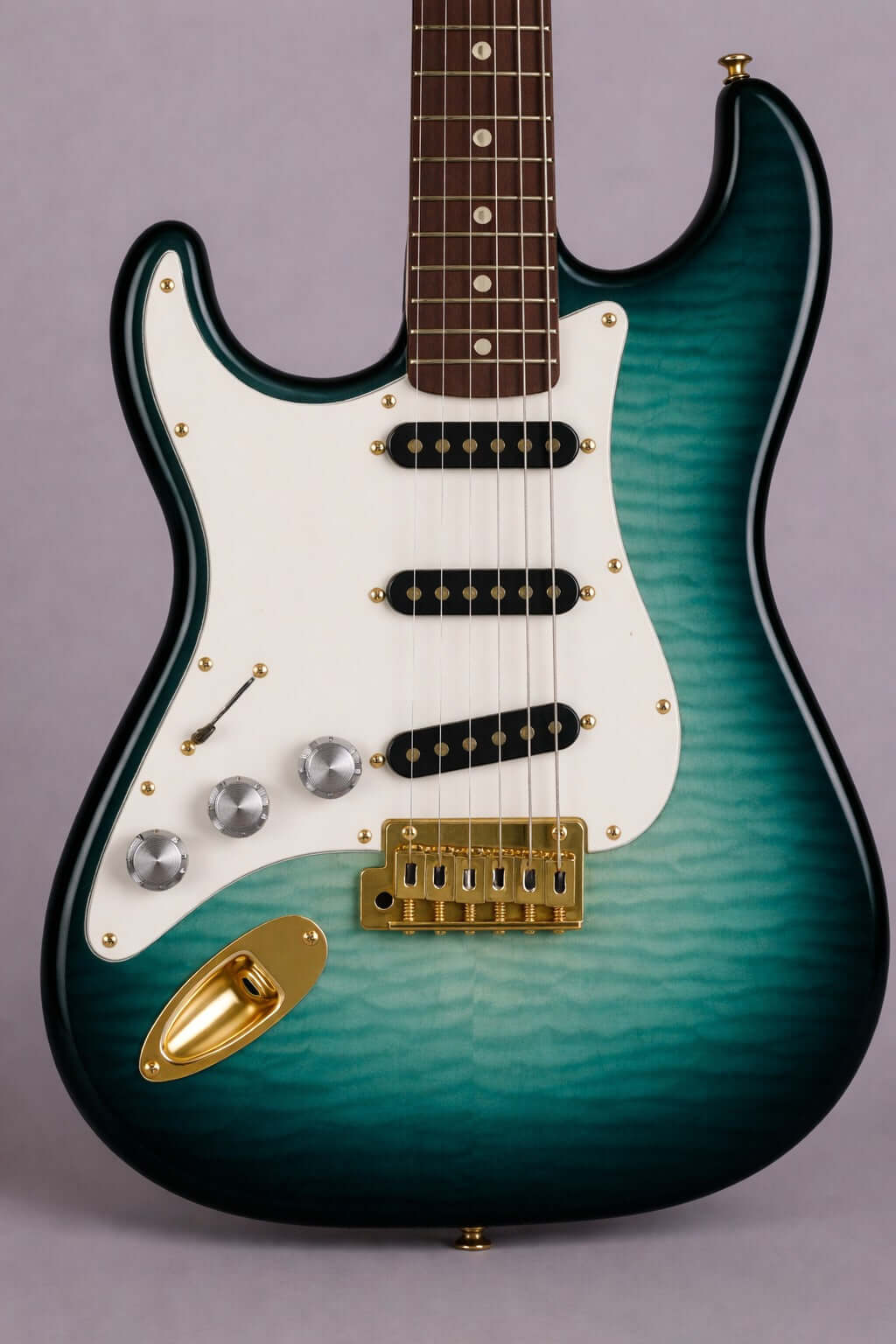
Mythic Phoenix Electric Guitar – Premium S Style – Flame Maple Veneer – Stainless Frets – USA Made
The Mythic Phoenix Electric Guitar combines an elegant flame maple veneer with a resonant tonewood body, offering both stunning aesthetics and exceptional sound quality. Designed for professional musicians, it features stainless steel frets and premium locking tuners that enhance tuning stability and playability. Crafted in the USA, this guitar represents a high standard in performance and durability for serious players.
View Product