
Handmade vs OEM Guitars: Which Suits You Best?
· Wolf
Overview
Choosing the right guitar can be a challenging decision for musicians, especially when weighing the benefits of handmade versus OEM options. This article explores the unique characteristics, advantages, and considerations of both types, helping readers understand which guitar best aligns with their playing style, budget, and personal preferences. By the end, you'll be equipped to make an informed choice that enhances your musical journey.
Table of Contents
- Understanding Handmade Guitars
- Quality Craftsmanship
- Customized Features
- Unique Sound Characteristics
- Diving into OEM Guitars
- Affordability
- Consistency in Production
- Wide Range of Choices
- Comparative Summary: Handmade vs OEM
- Which is Right for You?
- Consider Your Playing Style and Needs
- Budget Considerations
- Exploring Options at Mythic Guitars
- Testing Before Purchasing
- Seek Recommendations
- Final Thoughts: Rocking Your Choice
Key Takeaways
- Quality Craftsmanship: Handmade guitars feature unparalleled attention to detail and high-quality materials, enhancing overall sound and aesthetic.
- Customization Options: Choosing a handmade guitar allows for personalized features, tailored to individual preferences in sound and feel.
- Affordability: OEM guitars are generally more budget-friendly, making them accessible for beginners and musicians on a tight budget.
- Consistency: OEM guitars offer predictable quality and sound, ensuring reliability across multiple instruments of the same model.
- Variety of Choices: The OEM market provides a wide range of models suitable for different musical styles and genres.
- Unique Sound Profiles: Handmade guitars often possess distinct tonal qualities that are difficult to replicate in mass-produced options.
- Investment Value: Handmade guitars may retain their value better over time, especially those with exceptional craftsmanship.
Choosing the right guitar can feel overwhelming, especially when deciding between handmade and OEM options. Each type comes with its own unique advantages, and for musicians, whether budding or seasoned, understanding these differences can significantly impact their playing experience. In this guide, we will delve into the characteristics, benefits, and considerations surrounding handmade and OEM guitars, so you can make an informed decision tailored to your musical journey.
Understanding Handmade Guitars
Handmade guitars are crafted by skilled artisans who pour their expertise and passion into every instrument they create. The craftsmanship involved often results in a unique product that reflects the individuality of the maker. Here are a few key features that set handmade guitars apart:
Quality Craftsmanship
The meticulous attention to detail in handmade guitars is often unparalleled. Artisans take the time to select high-quality materials, ensuring that each component—from the wood selection to the finish—contributes to the overall sound and aesthetic. This dedication to quality often results in instruments with superior tonal characteristics.
Customized Features
One of the main benefits of choosing a handmade guitar is the ability to customize. If you're looking for a specific feel or sound, working with a luthier allows you to specify your preferences. Whether it’s a unique finish or a personalized custom guitar neck and body builder, the ability to tailor features to your liking is a significant advantage.
Unique Sound Characteristics
Handmade guitars often possess distinctive sound profiles that result from the luthier's expertise in material selection and construction techniques. Each instrument’s acoustics depend on how the wood is treated and crafted, leading to tonal qualities that are hard to replicate in mass-produced options.
Diving into OEM Guitars
OEM, or original equipment manufacturer, guitars are produced in factories using standardized processes. They are typically available at various price points and offer a range of features. Here’s a closer look at what OEM guitars bring to the table:
Affordability
One of the standout advantages of OEM guitars is their affordability. Grabbing a well-made OEM guitar can be much easier on the wallet compared to handmade instruments. For beginner musicians or those on a budget, OEM models can provide reliable sound quality without breaking the bank.
Consistency in Production
With OEM guitars, you can expect a consistent product. Each instrument produced will generally meet similar quality and sound standards. This predictability can be comforting, especially for those who want assurance that their version of an OEM guitar will perform similarly to others in its range.
Wide Range of Choices
The OEM market is flooded with options, catering to various musical styles and needs. Whether you're looking for a versatile electric guitar or a specific model that suits a niche genre, the variety available can be advantageous in finding the right fit for your playing style.
Comparative Summary: Handmade vs OEM
Now that we have discussed both options, let’s summarize the key differences and similarities:
- Craftsmanship: Handmade guitars offer artistic craftsmanship, while OEM guitars provide mass-manufactured consistency.
- Customization: Handmade options allow for high customization, whereas OEM guitars come in pre-defined models.
- Price: Generally, handmade guitars tend to be pricier, while OEM guitars are more budget-friendly.
- Sustainability: Some handmade guitars may utilize sustainably sourced materials, which can appeal to environmentally-conscious musicians.
- Sound: Handmade guitars may have unique tonal qualities, in contrast to the more standardized sound found in OEM options.
Which is Right for You?
Ultimately, the decision between a handmade and an OEM guitar will depend on your individual preferences and circumstances. If you value the craftsmanship, unique sound, and personalization options, then a handmade guitar might be the right choice for you. On the other hand, if you’re looking for affordability, consistency, and a wide variety of choices, an OEM guitar could be ideal.
Consider Your Playing Style and Needs
Identify your primary needs as a musician. Are you a beginner just starting out, or are you a seasoned performer looking to explore unique soundscapes? If you gravitate toward genres that favor versatility, you might find reliable matches in OEM guitars. If you play complex pieces that require nuanced tonal changes, exploring handmade options may be beneficial.
Budget Considerations
Your budget will likely be a significant deciding factor in your choice. Handmade guitars are often more expensive, so if you’re working within a stricter budget, consider leveraging your local music shops to find high-quality OEM models. However, keep in mind that investing in a handmade guitar can be lucrative as it may retain its value better over time, especially if it has remarkable craftsmanship.
Exploring Options at Mythic Guitars
At Mythic Guitars, we are devoted to providing high-quality guitars that cater to a variety of musical styles and preferences. Whether you’re interested in a unique handmade instrument or exploring exceptional OEM options, our range of guitars, including the Mythic Phantom ES2 Electric Guitar, is designed with musicians in mind.
Testing Before Purchasing
Whenever possible, test out guitars before committing to a purchase. Each guitar feels different in your hands, and being able to assess how it plays, sounds, and interacts with your style can be decisive. Many music stores allow you to play before you buy, which can be invaluable in your decision-making process.
Seek Recommendations
Talk to fellow musicians or seek online reviews to gather insight about different brands and models. Their experiences can guide you towards a suitable choice, helping you look beyond just the price into how each guitar performs in real-world scenarios.
Final Thoughts: Rocking Your Choice
Deciding between a handmade guitar and an OEM instrument doesn’t have to be a daunting task. By assessing your personal needs, budget, and style, you can make an informed decision that suits you best. Whichever path you choose, it’s essential to play what resonates with you. At Mythic Guitars, we celebrate the beauty of every instrument—crafted with passion and designed to inspire. Embrace your musical journey with the right guitar by your side!
Frequently Asked Questions
1. What are the main differences between handmade and OEM guitars?
2. What advantages do handmade guitars have?
3. Why might someone choose an OEM guitar?
4. How do budget considerations affect the choice between handmade and OEM guitars?
5. What should I do before purchasing a guitar?
Glossary
| Term | Meaning |
|---|---|
| Handmade Guitar | A guitar crafted by artisans, emphasizing unique craftsmanship and quality. |
| OEM Guitar | A guitar produced by an original equipment manufacturer, typically mass-produced. |
| Customization | The ability to personalize features of a guitar to suit individual preferences. |
| Quality Craftsmanship | Attention to detail and high standards in the making of handmade guitars. |
| Affordability | The cost-effectiveness of OEM guitars, making them accessible for beginners. |
| Sound Characteristics | The unique tonal qualities resulting from the materials and construction of a guitar. |
| Consistency | The reliability in quality and performance across multiple OEM guitar models. |
| Sustainability | The use of eco-friendly materials in some handmade guitars, appealing to conscious consumers. |
| Testing | The process of playing a guitar before purchase to assess its feel and sound. |
| Recommendations | Advice from musicians or reviews that help in selecting the right guitar. |
Linked Product
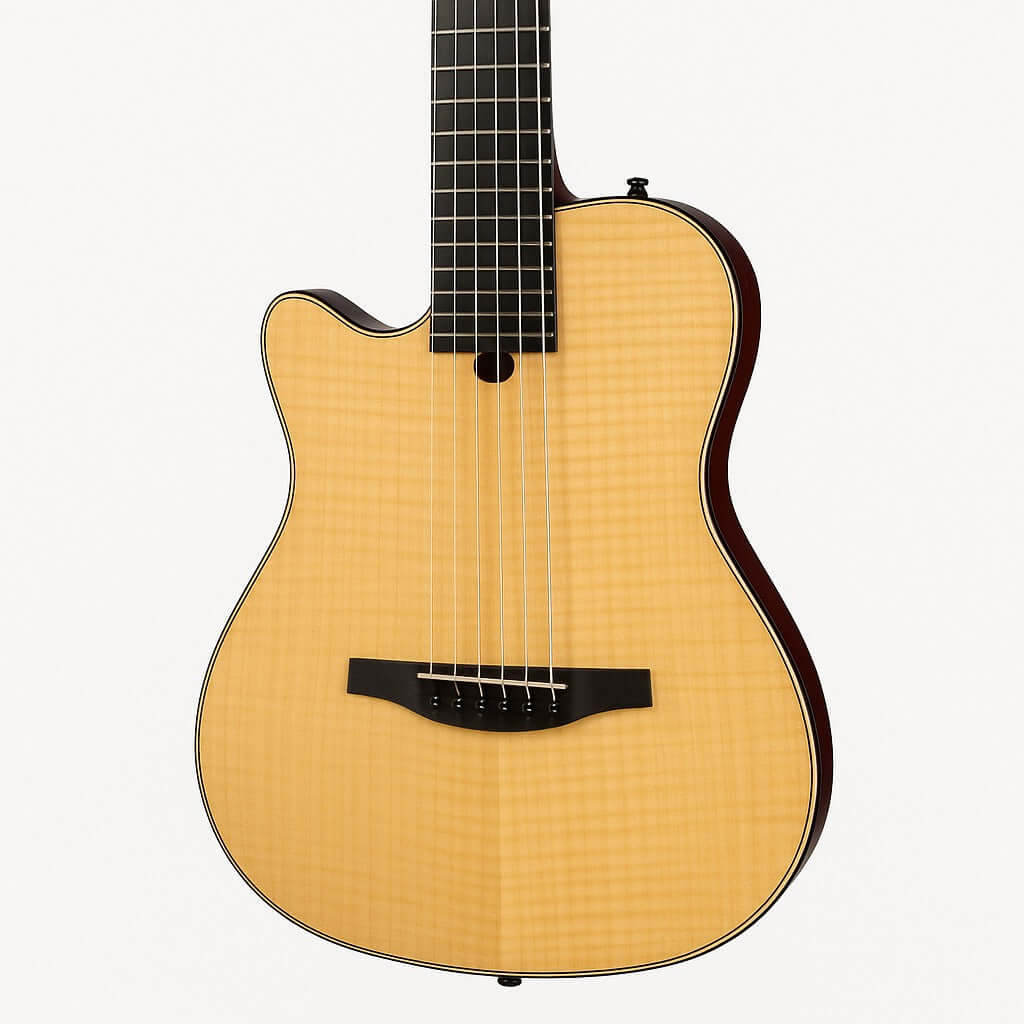
Mythic Phantom ES2 Electric Guitar – Chambered Semi Hollow Body – Flame Maple Top – USA Built
The Mythic Phantom ES2 Electric Guitar features a thinline chambered body and a flame maple top, offering a blend of acoustic warmth and electric clarity. Its professional-grade expression system allows for versatile tone shaping, making it suitable for various playing styles, including rhythm, lead, and ambient music. Built in the USA with premium tonal woods, this guitar is designed to provide a balanced sound profile with dynamic responsiveness.
View Product