
The Impact of Technology on Modern Guitar Crafting
· Wolf

Overview
Modern guitar building has undergone a significant transformation due to advancements in technology. Key developments include the use of CAD software for precise designs, CNC machines for accurate wood shaping, and 3D printing for intricate parts. New materials, including eco-friendly options, and sound optimization technologies enhance durability and sound quality. The customization process has become more accessible through online tools, allowing musicians to create tailored instruments. Emerging technologies like VR and AR are also influencing guitar crafting, promising an exciting future for musicians and luthiers alike.
Table of Contents
- The Evolution of Guitar Crafting Technology
- Digital Design and CAD Software
- CNC Machines Making Precision Parts
- 3D Printing in Guitar Parts Manufacturing
- The Role of Advanced Materials
- Eco-Friendly Alternatives
- Sound Optimization Technology
- Pickup Innovations
- Quality Control and Testing
- Using Technology for Customization
- The Artist-Builder Relationship
- Virtual Reality and Augmented Reality
- Future Trends in Guitar Technology
- Embracing Change and Innovation
- Strumming Towards Tomorrow
Key Takeaways
- Technological Advancements: Modern guitar building has evolved with tools like CAD software and CNC machines, enhancing precision and efficiency.
- Customization Options: Musicians can collaborate with builders to create personalized guitars, tailoring features such as neck shape and body type.
- 3D Printing: This technology allows for the creation of intricate parts, enabling unique designs and enhancements in guitar manufacturing.
- Eco-Friendly Materials: The industry is shifting towards sustainable materials, reducing environmental impact while maintaining quality.
- Sound Optimization: Advanced acoustics technology helps builders refine tonal quality, ensuring exceptional sound in modern guitars.
- Quality Control Improvements: Automated testing systems and environmental sensors enhance quality assurance in the manufacturing process.
- Emerging Technologies: Virtual Reality and Augmented Reality are paving the way for immersive design experiences in guitar crafting.
The art of guitar building has been transformed significantly over the years, thanks to groundbreaking advancements in technology. From the moment a piece of wood is selected to the final tuning before it’s in a musician's hands, every step in the process has been revolutionized. In this article, we’ll explore how technology influences today’s guitar building, with a specific focus on the renowned Austin Texas guitar factory known for crafting instruments like the Mythic Phoenix Electric Guitar.
The Evolution of Guitar Crafting Technology
To appreciate the role of technology in today’s guitar building process, it’s essential to understand how it has evolved. Gone are the days when luthiers relied purely on traditional tools and techniques. Modern guitar builders now have access to an array of advanced machinery and digital technology that enhances precision and efficiency.
Digital Design and CAD Software
One of the most significant advancements in guitar building is the incorporation of Computer-Aided Design (CAD) software. Luthiers can now create detailed three-dimensional models of their instruments, allowing for precise measurements and custom designs. This means that any musician can collaborate directly with builders to customize features such as neck shape, body type, and finish, leading to unique creations like the Mythic Phoenix Electric Guitar.
CNC Machines Making Precision Parts
Computer Numerical Control (CNC) machines have also revolutionized the guitar crafting process. These machines can cut and shape wood with unparalleled accuracy, reducing human error and ensuring consistency across production. This method is particularly beneficial in large-scale production settings, such as an Austin Texas guitar factory, where the goal is to maintain high-quality standards while producing multiple instruments.
3D Printing in Guitar Parts Manufacturing
Another technology making waves in guitar building is 3D printing. This innovative technique allows builders to create intricate parts that would be difficult or impossible to craft by hand. Components like pickups, bridges, or even custom inlays can be 3D printed, offering musicians endless possibilities for personalization and enhancement. The future of guitar manufacturing looks bright, as 3D printing continues to evolve and become more affordable.
The Role of Advanced Materials
In conjunction with technology, the materials used in guitar construction have also evolved. Traditional woods like mahogany and maple are still popular, but the introduction of engineered woods and synthetic materials has provided builders with more options. These modern materials can enhance the durability and sound quality of instruments, allowing for greater innovation in design.
Eco-Friendly Alternatives
As sustainability becomes increasingly important to consumers, the guitar industry is also adapting. Many manufacturers are exploring eco-friendly materials sourced from responsibly managed forests or using recycled materials. This transformation ensures that guitar production has a lower environmental impact while still producing high-quality instruments. The utilization of these materials can be found in modern designs, including the Mythic Phoenix Electric Guitar, appealing to eco-conscious musicians.
Sound Optimization Technology
Another critical aspect of modern guitar building is sound optimization. Advanced acoustics technology allows builders to analyze and refine the tonal quality of guitars with precision. Specialized software can simulate how different woods and shapes will affect sound, enabling builders to craft instruments that not only look beautiful but also produce exceptional sound quality.
Pickup Innovations
Pickup technology has also seen tremendous advancements. Traditional magnetic pickups are now complemented by advancements in active pickups and digital systems that allow for a wider range of sounds. These innovations give musicians greater control over their tone and functionality, thus widening the artist's creativity. This is particularly noticeable in electric guitars like the Mythic Phoenix Electric Guitar, which takes full advantage of these technological advancements to offer superior performance.
Quality Control and Testing
Technology has also improved the quality assurance process in guitar manufacturing. Instead of relying purely on the experience of individual luthiers, manufacturers can incorporate temperature and humidity sensors to ensure the wood is properly treated and maintained. Additionally, automated testing systems can assess the sound quality and playability of instruments before they reach the market. This ensures consistently high-quality guitars for musicians everywhere.
Using Technology for Customization
The customization of guitars has never been more accessible. With design software and online configurators, customers can visualize their guitars in real-time, making informed decisions about finishes, hardware, and specifications. For example, using an Austin Texas guitar factory’s online configurator means that you can design an instrument that matches your personal aesthetics and sound preferences, directly engaging with the process. This accessibility provides customers with an unprecedented level of involvement in creating tailored instruments like the Mythic Phoenix Electric Guitar.
The Artist-Builder Relationship
The collaboration between artists and builders has also benefitted from technology. With social media platforms and online forums, musicians can directly communicate their needs and preferences with luthiers, facilitating a relationship that may not have been possible in the past. This direct line of communication allows for a better understanding of the artist's vision and ultimately leads to the production of guitars that resonate with their unique style.
Virtual Reality and Augmented Reality
Emerging technologies like Virtual Reality (VR) and Augmented Reality (AR) are also starting to play a role in guitar building. Imagine trying out a virtual representation of your custom guitar model before it's made. This gives musicians an opportunity to engage in an immersive design experience, providing valuable feedback to builders. It’s an exciting development that enhances the personalized aspect of guitar crafting.
Future Trends in Guitar Technology
Looking forward, the guitar crafting process is poised for further transformations. As technology continues to advance, we can expect even more innovative materials and tools that will enhance the way guitars are made. From artificial intelligence to machine learning, the possibilities are endless. It’s an exciting time for musicians and luthiers alike, as the blending of technology with artistry opens up new horizons.
Embracing Change and Innovation
Ultimately, the role of technology in today's guitar building process cannot be understated. It has improved efficiency, quality, and customization while maintaining the artistry and craftsmanship that define the instrument. For guitar enthusiasts seeking unique and high-quality instruments, there’s no better place to explore than an Austin Texas guitar factory known for creating masterpieces like the Mythic Phoenix Electric Guitar. By embracing change and innovation, we can anticipate a future where guitars continue to evolve and inspire musicians around the globe.
Strumming Towards Tomorrow
As we navigate the future of guitar building, it's clear that technology will play a pivotal role in shaping the instruments of tomorrow. Whether you're an aspiring musician or a seasoned artist, understanding these advancements can enhance your appreciation for the craft behind your favorite guitars. With the combination of traditional craftsmanship and modern technology, the possibilities are infinite. Stay tuned for more innovations that will redefine not only the guitars we play but also the music we create.
Frequently Asked Questions
1. How has technology transformed guitar building over the years?
2. What role does CAD software play in modern guitar design?
3. What advantages do CNC machines provide in guitar manufacturing?
4. How is sound optimization technology used in guitar building?
5. What future trends are expected in guitar technology?
Glossary
| Term | Meaning |
|---|---|
| Guitar Building | The process of creating guitars, involving various techniques and materials. |
| Luthier | A craftsman who builds or repairs string instruments, particularly guitars. |
| CAD Software | Computer-Aided Design software used for creating detailed 3D models. |
| CNC Machines | Computer Numerical Control machines that automate the cutting and shaping of materials. |
| 3D Printing | A manufacturing process that creates parts layer by layer from a digital model. |
| Eco-Friendly Materials | Materials sourced sustainably or made from recycled products. |
| Sound Optimization | The process of refining a guitar's tonal quality using advanced technology. |
| Pickup | A device that captures string vibrations and converts them into electrical signals. |
| Quality Control | Measures taken to ensure products meet specific standards of quality. |
| Customization | The ability for customers to personalize their instruments according to preferences. |
Linked Product
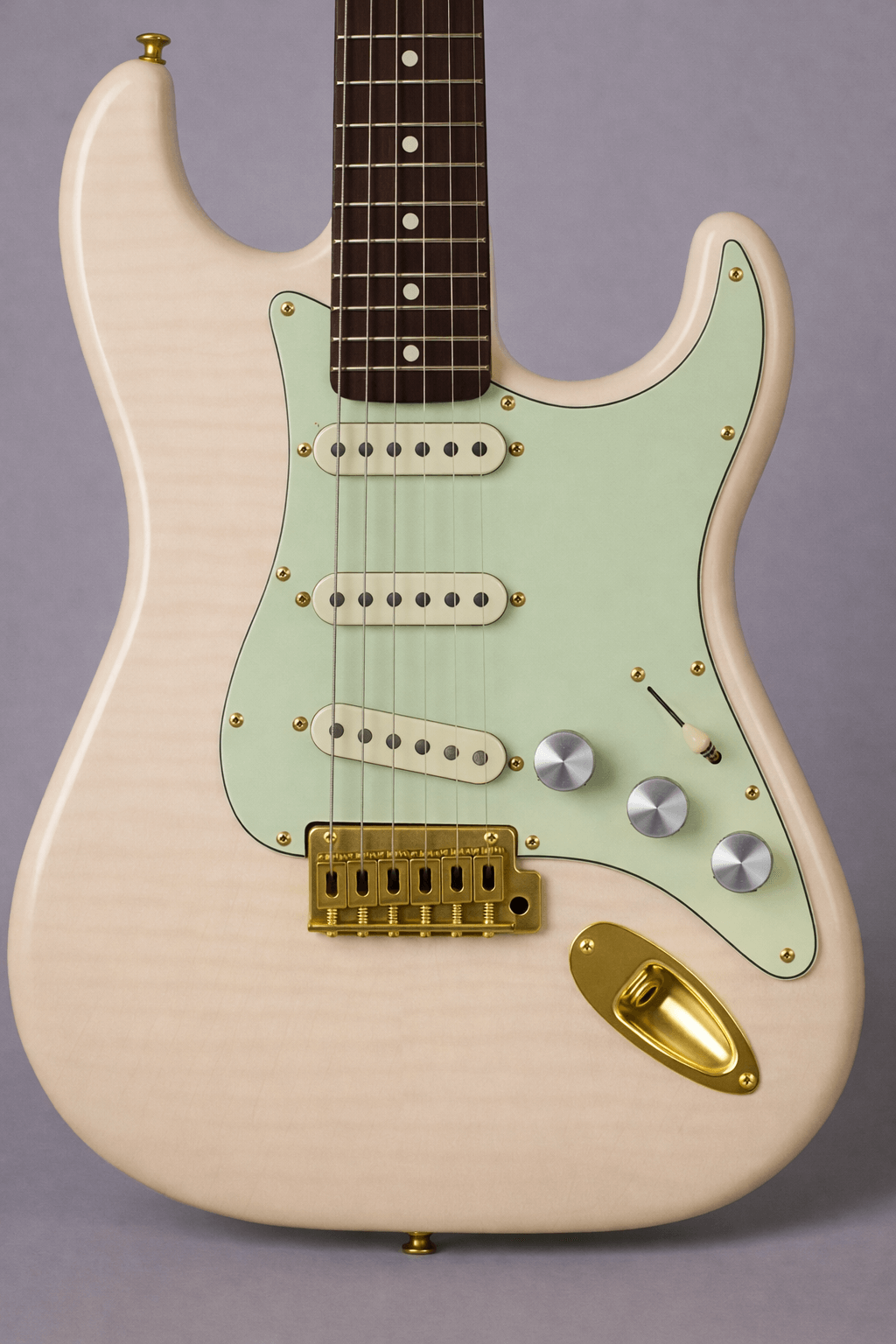
Mythic Phoenix Electric Guitar – Premium S Style – Flame Maple Veneer – Stainless Frets – USA Made
The Mythic Phoenix Electric Guitar is a premium S-style instrument designed for professional players, featuring a flame maple veneer that adds visual appeal and resonance. With stainless steel frets and premium locking tuners, this guitar ensures excellent tuning stability and durability. Made in the USA, it promises elite performance and craftsmanship, making it a top choice for those seeking a high-end electric guitar.
View Product