
Finishing Touches: Wood Types in Guitar Building
· Wolf
Overview
Choosing the right wood is crucial for crafting a quality guitar, impacting its sound, playability, and aesthetics. Different wood types resonate uniquely, influencing tonal characteristics that can enhance or define a player's style. By understanding the properties of various woods used for the body, neck, and fretboard, guitarists and builders can make informed decisions that elevate their musical experience.
Table of Contents
- The Importance of Wood in Guitar Making
- Common Wood Types Used in Guitar Construction
- Body Woods
- Neck Woods
- Fretboard Woods
- Hybrid Approaches in Guitar Construction
- Choosing the Right Wood for Your Guitar
- The Influence of Wood Type on Tone Woods
- Understanding Soundboards
- How Wood Aging Affects Tone
- Wood Treatments and Finishes
- Final Thoughts on Guitar Wood Types
Key Takeaways
- Wood Selection Matters: The type of wood used in a guitar significantly affects its sound, playability, and appearance.
- Body Woods: Common choices include mahogany for warmth, maple for brightness, spruce for resonance, and cedar for mellowness.
- Neck Woods: Maple and mahogany are popular for necks, influencing tonal balance and sustain.
- Fretboard Impact: Woods like ebony and rosewood enhance playability and tonal quality, with unique characteristics for each type.
- Hybrid Construction: Combining different wood types can create versatile instruments with diverse tonal palettes.
- Player Preferences: Choosing wood should align with the musician's style, skill level, and personal taste for optimal performance.
- Aging Effects: Aged wood can yield more resonant and vibrant sounds, making it a preferred choice for many builders.
When creating a quality guitar, the choice of wood is essential and can drastically influence its sound, playability, and appearance. Guitarists often regard their instrument as a partner, crucial in developing their sound and preserving their style. For those who are exploring the craft of guitar-making or are simply enthusiasts eager to learn about the various materials that bring their favorite instrument to life, understanding wood types is paramount. In this article, we will navigate through the different types of wood used in finishing touches, from body to neck to fretboard, focusing on how each selection impacts a guitar's tone and overall performance.
The Importance of Wood in Guitar Making
Wood types contribute not only to the aesthetics of the guitar but also play a vital role in sound production. Different woods resonate differently, and their density, grain structure, and age can affect the tonal quality. For instance, a dense hardwood may yield a brighter tone, while a softer wood may provide a warmer, mellower sound. Understanding these distinctions helps both builders and players choose the right materials for their desired sonic outcome.
Common Wood Types Used in Guitar Construction
Let’s explore the various woods typically used in the construction of guitars, highlighting their characteristics and the special roles they play.
Body Woods
The body of the guitar is perhaps the most significant area where wood type affects tone. Below are some of the most commonly used woods for guitar bodies:
- Mahogany - Known for its warm, mellow tone, mahogany enables soft mid-range frequencies while delivering a solid low-end presence. This wood is frequently used in the backs and sides of electric and acoustic guitars.
- Maple - Maple is a dense hardwood, providing bright, punchy tones with great sustain. It is often utilized for the tops of electric guitars like the Mythic Phantom ES2 Electric Guitar and is designed to enhance rich overtones.
- Spruce - This wood is the standard for acoustic guitar tops due to its excellent resonance and tonal clarity. Spruce provides a balanced sound with a quick response that appeals to fingerstyle and strumming musicians alike.
- Cedar - Cedar is another top wood commonly used in acoustic guitars; it provides a warm, mellow sound with a wide dynamic range, making it a popular choice for fingerstyle players.
- Alder - Frequently used in electric guitars, alder offers a balanced tone with a slightly softer midrange. Its light weight adds to the comfort of the guitar.
Neck Woods
The wood used for the neck of a guitar also profoundly influences playability and sound. Here are the primary choices for guitar necks:
- Maple - In addition to its use for bodies, maple is often chosen for necks as well. It has a bright sound and can enhance the overall tonal balance of the guitar.
- Mahogany - When used for necks, mahogany provides a rich tone that contributes warmth and depth while helping sustain notes.
- Paddle Poplar - This wood is lighter and often used in necks for its ease of carving, which can lower production costs without compromising quality too much.
Fretboard Woods
The fretboard wood significantly impacts the feel and response of the guitar. Here are the primary wood types used:
- Ebony - Renowned for its smooth playing surface, ebony provides a bright tone and excellent sustain. Its dense, dark appearance is also visually appealing.
- Rosewood - A favored choice, rosewood offers warmth and a slightly soft feel under the fingers. It often produces a full-bodied sound with a more pronounced midrange.
- Maple - Some electric guitars use maple for their fretboards as well, contributing to a bright sound and fast attack.
Hybrid Approaches in Guitar Construction
The Mythic Phantom ES2 Electric Guitar, for example, exemplifies how blending wood types can create unique instruments. The chambered semi-hollow body construction, featuring a flame maple top, effectively marries the attributes of various woods. The design allows for a versatile tonal palette that combines the rich, resonant qualities of mahogany with the bright, singing highs of maple. This hybrid approach provides players with an instrument capable of delivering dynamic responsiveness, whether playing rhythm or lead.
Some manufacturers also explore laminated woods, which can combine multiple wood types to enhance durability and stability, particularly in environments with varied humidity and temperature levels.
Choosing the Right Wood for Your Guitar
When selecting woods for guitar building, one crucial factor is understanding the player's style and preferences. Here are some considerations:
- Musical Style: Different genres of music often require different tonal characteristics. For example, metal guitarists might prefer bright-sounding wood types like maple, while folk players might lean towards warmer tones from mahogany or cedar.
- Skill Level: Beginners may prefer lightweight guitars with soft-playing necks, while professionals might opt for heavier woods that offer greater sustain and resonance.
- Personal Preference: Individual taste plays a significant role, and what might sound great to one player could feel uncomfortable for another. Trying out different wood types is crucial to finding the ideal match.
The Influence of Wood Type on Tone Woods
Each type of wood has its voice, which is not just about the notes produced but also how they interact with other elements in the instrument.” Whether the guitar is built in a famous Austin Texas guitar factory or a small workshop, the choice of wood can shape its destiny in the hands of the musician.
Understanding Soundboards
The soundboard (the top of an acoustic guitar) is crucial in amplifying sound. Different soundwoods create a unique blend of tones and help define the overall voice of the guitar. Many builders choose a particular soundboard wood based on the tonal qualities desired.
- Spruce Top: Bright and powerful sound, perfect for strumming and flatpicking.
- Cedar Top: Warm and more pronounced lower tones, distinguished for fingerstyle techniques.
How Wood Aging Affects Tone
Beyond the type of wood, the age of the wood is equally significant. As wood ages, its density changes, leading to a more resonant and vibrant sound. Many seasoned luthiers advocate using aged tonewoods, as these can offer tonal advantages that new woods do not.
Wood Treatments and Finishes
Finally, the finishing treatment on wood can also alter its acoustic properties. Certain finishes can add weight, alter resonance, or even dampen unwanted overtones. Builders often experiment with various finishes, treatments, and oils to find the perfect blend that retains the desired tonal characteristics while enhancing durability.
Final Thoughts on Guitar Wood Types
The choice of wood in guitar building extends beyond aesthetics and craftsmanship; it shapes the instrument's soul and personality. Whether you opt for a classic mahogany body, a bright maple top on your Mythic Phantom ES2 Electric Guitar, or explore innovative wood combinations, understanding the unique properties each brings can enhance your musical journey. As you dive deeper into the world of guitar making, remember to prioritize your personal style and preferences. The right wood selection will help ensure your instrument becomes a cherished part of your musical story.
Frequently Asked Questions
1. What role does wood choice play in guitar making?
2. What are common wood types used for guitar bodies?
3. How does the wood used for the neck affect a guitar?
4. What types of wood are typically used for fretboards?
5. Why is aging wood important in guitar construction?
Glossary
| Term | Meaning |
|---|---|
| Mahogany | A warm-toned wood used for backs and sides, known for its solid low-end presence. |
| Maple | A dense hardwood that provides bright tones and is often used for tops and necks. |
| Spruce | Commonly used for acoustic tops, it offers excellent resonance and tonal clarity. |
| Cedar | A warm wood that allows for a wide dynamic range, favored by fingerstyle players. |
| Alder | Lightweight wood used in electric guitars, providing a balanced tone. |
| Ebony | Known for its smooth surface and bright tone, commonly used for fretboards. |
| Rosewood | A warm wood that produces a full-bodied sound with pronounced midrange. |
| Soundboard | The top of an acoustic guitar, crucial for amplifying sound. |
| Hybrid Construction | Combining different wood types to create unique tonal qualities in guitars. |
| Wood Aging | The process where wood becomes denser over time, enhancing its resonance. |
Linked Product
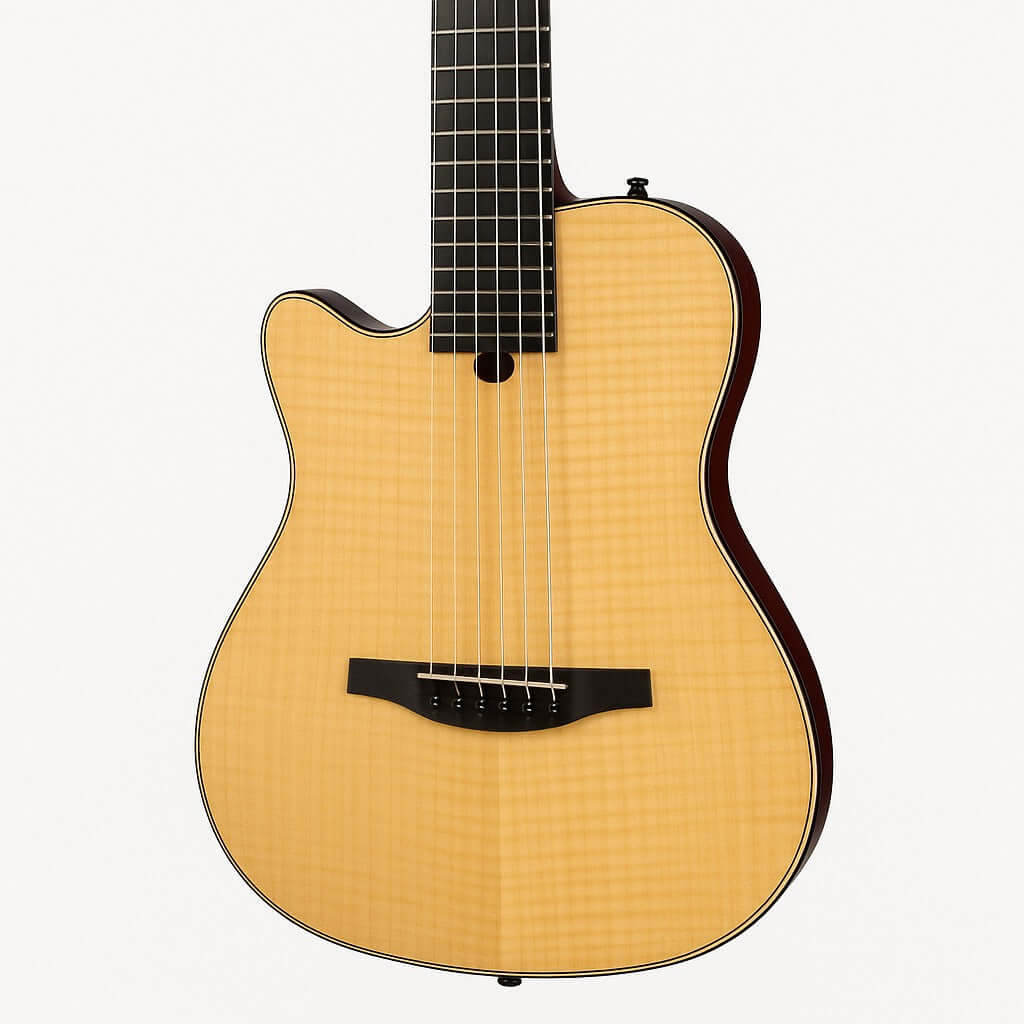
Mythic Phantom ES2 Electric Guitar – Chambered Semi Hollow Body – Flame Maple Top – USA Built
The Mythic Phantom ES2 Electric Guitar features a thinline chambered semi-hollow body with a flame maple top, providing a blend of acoustic warmth and electric clarity. Its professional-grade expression system allows for versatile tone shaping, making it suitable for various playing styles, from rhythm to ambient. Built in the USA with premium tonal woods, this guitar ensures a balanced sound profile with dynamic responsiveness.
View Product