
Discovering Wood Types for Custom Guitars
· Wolf
Overview
Choosing the right wood is crucial for crafting a custom guitar, as it affects both sound quality and aesthetics. Common woods like mahogany, maple, spruce, and alder offer unique tonal characteristics, while popular combinations can enhance overall performance. Exotic woods like walnut and bamboo also provide distinctive sounds. Factors to consider include playing style, sound preferences, aesthetics, and budget. Collaborating with skilled luthiers and boutique manufacturers can help create a personalized instrument that meets your needs and vision.
Table of Contents
- The Importance of Wood in Guitar Crafting
- Tonal Characteristics of Different Woods
- Popular Wood Combinations for Custom Guitars
- An Overview of Exotic Woods
- Factors to Consider When Choosing Wood
- How Wood Affects Guitar Sustain and Resonance
- Custom Finish and Wood Treatment
- Choosing the Right Boutique Guitar Manufacturer
- Working with Luthiers
- Final Thoughts: Crafting Your Dream Guitar
Key Takeaways
- Wood Selection is Key: The type of wood significantly affects both the sound quality and aesthetic appeal of a custom guitar.
- Common Wood Types: Mahogany, maple, spruce, and alder are popular choices, each offering unique tonal characteristics.
- Wood Combinations Matter: Pairing woods like mahogany with a maple top can enhance warmth and sustain, while swamp ash with a maple neck provides brightness.
- Exotic Woods for Unique Sound: Options like walnut and bamboo not only look stunning but also contribute distinct tonal qualities.
- Consider Your Playing Style: Your preferred playing style can influence your wood choices, affecting sound and playability.
- Importance of Luthiers: Working with a skilled luthier can provide valuable insights into wood properties and enhance your custom guitar's outcome.
- Finish Affects Tone: The finishing techniques used on the wood can alter both the sound and appearance of the guitar.
When it comes to crafting the perfect custom guitar, the choice of wood is paramount. The type of wood not only defines the aesthetic appeal of the instrument but also greatly impacts its sound quality and playability. For guitar enthusiasts, especially those interested in unique styles like the Super Strat guitar, understanding wood types is essential for making informed choices. In this article, we will explore various wood types commonly used in making custom guitars, their characteristics, and how they influence your playing experience.
The Importance of Wood in Guitar Crafting
Wood selection is a critical aspect of guitar manufacturing. Different woods have unique tonal properties that can enhance the sound projection, sustain, and overall tonal color of the instrument. Additionally, wood plays a significant role in the aesthetics of your guitar. For those looking to order a custom guitar from a boutique guitar manufacturer, understanding these factors is vital to achieving the desired sound and look.
Tonal Characteristics of Different Woods
Let’s take a deeper dive into the fundamental wood types that are commonly used in custom guitars:
Mahogany
Mahogany is a popular choice for guitar bodies due to its warm, rich tone. Known for its acoustic resonance, mahogany guitars deliver a powerful midrange presence. When you're playing a Super Strat guitar, mahogany can offer a balance of brightness and warmth, making it an excellent wood option for versatile playstyles.
Maple
This hard and dense wood is often used for necks and fingerboards. Maple guitars tend to have a brighter tone with plenty of sustain. If you’re looking for a clear and powerful sound projection—especially in lead guitar performances—a custom guitar with a maple neck could elevate your playing experience!
Spruce
Spruce is the go-to wood for guitar tops due to its light weight and durability. It provides a bright, strong sound with excellent projection. When combined with a mahogany body, a spruce top can give a Super Strat guitar a well-rounded tonal profile, making it suitable for a variety of music genres.
Alder
Alder is commonly found in electric guitars for its balanced tone. With a focus on midrange frequencies, guitars made from alder often have a warm and full sound. This wood type is often seen in classic Strat models, lending itself well to a customized Super Strat guitar that has a versatile tone palette.
Popular Wood Combinations for Custom Guitars
Many boutique guitar manufacturers offer exciting wood combinations to cater to diverse playing preferences. Here are some popular pairings to consider for your custom guitar:
- Mahogany body with a maple top: This combination provides the warmth of mahogany, complemented by the brightness and sustain of maple.
- Swamp Ash body with a maple neck: Swamp ash is lightweight and resonates well, resulting in a tone that’s bright and airy when paired with a sturdy maple neck.
- Mahogany neck with a rosewood fingerboard: Here, the warmth of mahogany offers a smooth playability, while rosewood, being softer, provides a more rounded tone and a comfortable touch.
An Overview of Exotic Woods
For players looking to stand out, many boutique guitar manufacturers also offer exotic woods that are not only stunning but also enhance sound quality:
Walnut
Walnut is an elegant wood choice for both the body and neck of a guitar. It produces a tonal quality that falls between maple and mahogany—bright and clear yet warm and rich. If you're crafting a custom guitar, walnut could be the perfect option for unique sound and striking appearance.
Bamboo
As an eco-friendly option, bamboo has gained traction in the guitar-making community. Its stiffness and lightweight nature results in an articulate sound with good projection. Bamboo guitars can appeal to environmentally conscious players while still delivering dynamic tones.
Factors to Consider When Choosing Wood
When selecting wood for your custom guitar, consider the following:
- Playing Style: Your preference for styles such as strumming, fingerpicking, or lead playing can influence your wood choices.
- Sound Preferences: Do you prefer warm and mellow tones, or brighter and sharper sounds? Different woods cater to different sound profiles.
- Aesthetic Appeal: The appearance of the wood can affect the overall look of the guitar. Unique grains and colors might be a priority for some players.
- Budget Considerations: Exotic woods may be more expensive. Determine what materials fit within your budget while meeting your sound and aesthetic goals.
How Wood Affects Guitar Sustain and Resonance
The sustain of a guitar, which is how long a note lasts after it has been played, is heavily influenced by wood type. Dense hardwoods often provide more sustain, making them favorable for elaborate solos. Conversely, softer woods allow for quicker decay and a brighter sound. Understanding how different woods interact with the strings can help you choose a guitar that meets your preferences regarding sustain and resonance.
Custom Finish and Wood Treatment
Beyond the types of wood used, finishing techniques can also affect the sound and aesthetics of your guitar. For instance, oils and varnishes can create a protective barrier while enhancing or altering the guitar's natural tone. A boutique guitar manufacturer often customizes the finish to enhance both the look and sound quality, making it essential to discuss your preferences in this area.
Choosing the Right Boutique Guitar Manufacturer
When pursuing a custom guitar, selecting the right boutique guitar manufacturer is crucial. Look for manufacturers who utilize quality tonewoods and have a strong reputation for craftsmanship. Pay attention to customer reviews and ask for recommendations from fellow musicians. A good manufacturer will work closely with you to understand your needs, ensuring you receive an instrument that not only looks amazing but plays beautifully.
Working with Luthiers
Involving a skilled luthier in your custom guitar process can greatly enhance the outcome of your project. Luthiers have a depth of knowledge regarding wood properties, tonal qualities, and construction techniques. They can offer valuable insights on which woods will work best for your unique playing style and preferences. Building a good relationship with your luthier can lead to a perfectly tailored instrument that exceeds your expectations.
Final Thoughts: Crafting Your Dream Guitar
Creating your custom guitar is an exciting journey, and the choice of wood is one of the most vital decisions you will make in that process. By exploring different wood types, understanding their tonal characteristics, and working closely with a boutique guitar manufacturer, you can craft a Super Strat guitar, or any style, that is uniquely yours. Every strum, pluck, and note will echo the vision you brought to life. So embrace this opportunity to explore, learn, and ultimately craft the guitar of your dreams!
Frequently Asked Questions
1. Why is the choice of wood important in custom guitar crafting?
2. What tonal characteristics can I expect from mahogany wood in guitars?
3. What wood type is often used for guitar tops, and what are its properties?
4. What factors should I consider when selecting wood for my custom guitar?
5. How can working with a luthier improve my custom guitar experience?
Glossary
| Term | Meaning |
|---|---|
| Custom Guitar | A personalized guitar designed to meet individual preferences. |
| Mahogany | A warm-toned wood known for its acoustic resonance and midrange presence. |
| Maple | A dense wood that offers bright tones and excellent sustain, often used for necks. |
| Spruce | A lightweight wood ideal for guitar tops, providing strong sound projection. |
| Alder | A wood that delivers a balanced tone, commonly used in electric guitars. |
| Exotic Woods | Rare woods that enhance sound quality and provide unique aesthetics. |
| Sustain | The duration a note lasts after being played, influenced by wood type. |
| Luthier | A skilled craftsman specializing in building and repairing stringed instruments. |
| Tonal Characteristics | The unique sound qualities produced by different types of wood. |
| Boutique Manufacturer | A small, specialized company that creates high-quality custom instruments. |
Linked Product
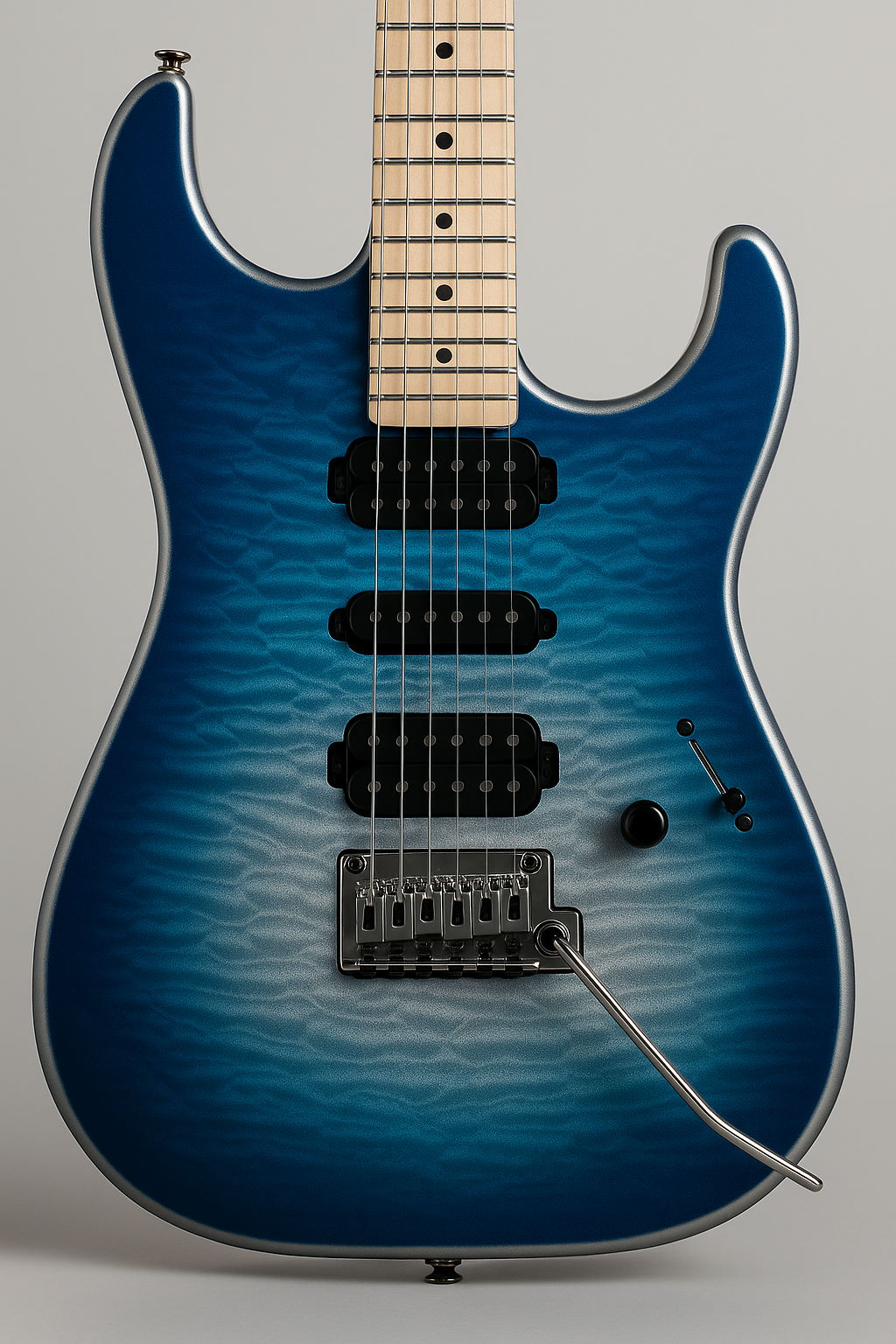
Mythic Valkyrie Electric Guitar – Modern Super Strat – Dual Humbucker – USA Made
The Mythic Valkyrie Electric Guitar is designed for high-performance playing with features that enhance speed, precision, and tonal versatility. Its resonant alder body and solid-maple top provide strong sustain and a balanced sound, while the fast neck and jumbo frets facilitate effortless technical play. Additionally, the guitar offers ten unique voicings and coil-splitting capabilities, making it suitable for a variety of musical styles and techniques.
View Product