
The Evolution of Guitar Designs: A Builder's Perspective
· Wolf

Overview
Guitar design has evolved significantly over the years, influenced by historical trends, technological advancements, and changing musical styles. Today's builders can draw from past innovations, explore sustainable materials, integrate technology, and embrace customization to meet modern players' needs. The future of guitar craftsmanship promises exciting possibilities, including the incorporation of AI and unique designs like the Mythic Phantom ES2, highlighting the blend of tradition and innovation in creating instruments that resonate with musicians.
Table of Contents
- The Birth of Modern Guitars
- The Solid Body Revolution
- Understanding Contemporary Design Trends
- Sustainable Materials
- Technological Integration
- The Rise of Customization
- The Role of Workshops and Community
- Glimpsing the Future
- Incorporating Artificial Intelligence
- The Mythic Phantom ES2: A Case Study
- The Journey Ahead for Builders
Key Takeaways
- Historical Evolution: Modern guitars emerged in the late 19th and early 20th centuries, influenced by earlier string instruments like the lute.
- Solid Body Revolution: The 1950s introduced solid body electric guitars, with iconic models like the Fender Stratocaster and Gibson Les Paul setting industry standards.
- Sustainability Trends: Builders are increasingly using eco-friendly materials and finishes, reflecting a growing awareness of environmental issues.
- Technological Integration: Modern guitars now feature advanced electronics, MIDI compatibility, and smart features that enhance player experience.
- Customization Demand: Musicians seek personalized instruments, prompting builders to offer unique aesthetics, tailored hardware, and ergonomic designs.
- Community Engagement: Workshops and online platforms foster collaboration and education among builders and musicians, enhancing the craft of guitar making.
- Future Innovations: The incorporation of artificial intelligence in guitar design allows for personalized modifications, optimizing sound and performance.
Guitar design has come a long way since its early days, evolving through countless innovations that reflect the changing tastes of musicians and musical trends. Understanding this evolution is crucial for builders today, as it not only guides design principles but also shapes the future of guitar craftsmanship. This article delves into the historical timeline of guitar designs, the latest trends, and what it means for builders, especially those interested in unique approaches such as ghost guitar manufacturing concepts and the iconic Mythic Phantom ES2.
The Birth of Modern Guitars
The modern guitar, as we know it today, emerged in the late 19th and early 20th centuries. Instruments crafted during this time were often influenced by earlier string instruments such as the lute and the vihuela. The guitar began to take its recognizable shape, featuring a waist, a flat back, and a soundboard that amplified the sound.
For builders, this era introduced several design principles that remain integral to guitar making today:
- Shape and Form: The silhouette of the guitar began to take shape, paving the way for various body styles that catered to different playing styles and musical genres.
- Materials: The choice of wood became crucial, with tonewoods like spruce and mahogany becoming favorites among builders for their acoustic properties.
- Neck Construction: Innovations in neck construction provided guitarists with enhanced playability, leading to the development of adjustable truss rods.
The Solid Body Revolution
The solid body electric guitar revolutionized the music industry in the 1950s. This era saw the birth of iconic designs that are still relevant today. Guitars such as the Fender Stratocaster and Gibson Les Paul set standards for sound and performance.
For builders, the solid-body design opened new avenues for customization and innovation:
- Pickups: The introduction of pickups allowed for greater versatility in sound, leading to inspirations for builders to experiment with different configurations and materials.
- Finish Options: New finishing techniques gave builders the ability to create visually stunning instruments that captured the imagination of guitarists everywhere.
- Weight and Balance: Builders began to focus on the weight distribution of guitars to enhance comfort and playability.
Understanding Contemporary Design Trends
The last few decades have seen further shifts in guitar design, heavily influenced by technological advances and changing musical genres. Builders today are faced with a plethora of design trends that can be overwhelming but also exciting.
Sustainable Materials
With a growing awareness of environmental issues, sustainability has become a significant trend in guitar manufacturing. Builders are now sourcing environmentally friendly woods and finishes, leading to a new market for guitars that not only sound good but also are kind to the planet.
For aspiring builders interested in sustainable design, here are some key considerations:
- Alternative Tonewoods: Exploring the use of alternative exotic woods that don’t deplete natural resources.
- Eco-Friendly Finishes: Utilizing finishes that minimize environmental impact while still protecting the instrument.
- Waste Reduction: Implementing processes that reduce waste during the manufacturing process, such as laser cutting technology that optimizes wood usage.
Technological Integration
Technology has become an integral part of guitar design, leading to innovative features such as built-in effects, MIDI output, and even digital connectivity. These advancements provide builders with new ways to meet the demands of modern players.
Key elements of tech integration include:
- Electronic Components: Advanced wiring and electronics that can provide players with unique tones and effects.
- MIDI Compatibility: Builders are now designing guitars that can interface directly with software and synthesizers, allowing for versatile performance options.
- Smart Features: Instruments that can monitor their tuning, humidity, and even suggest maintenance schedules.
The Rise of Customization
Customization is one of the most significant trends in current guitar design. Players are no longer content with off-the-shelf options; they seek instruments tailored to their individual tastes and needs.
For guitar builders, the opportunity for offering bespoke modifications is enormous:
- Unique Aesthetics: Custom paint jobs, inlays, and body shapes allow builders to cater to a variety of artistic styles.
- Hardware Selection: Options for personalized hardware can give players distinct sounds and performance experiences.
- Ergonomic Features: Tailoring neck profiles and body shapes to suit various playing styles significantly enhances playability.
The Role of Workshops and Community
This rising trend toward customization has also fostered a sense of community among builders and musicians. Workshops have become places to share techniques, collaborate on projects, and educate others about the art of guitar making. This newer generation is keen to learn about concepts such as ghost guitar manufacturing, piquing their interest in both craftsmanship and innovative solutions in the industry.
Key elements of this community involvement include:
- Collaborative Projects: Builders are teaming up to create hybrid designs that blend various styles and techniques.
- Educational Workshops: Offering courses and tutorials on guitar making can inspire new builders to enter the field.
- Online Communities: Social media has enabled builders to display their works, receive feedback, and form connections with guitarists worldwide.
Glimpsing the Future
As we look to the future of guitar design, the possibilities seem limitless. The industry is continually evolving, with builders pushing the boundaries of creativity and craftsmanship. Understanding past trends and current influences will offer a foundation to innovate and contribute to this dynamic landscape.
Incorporating Artificial Intelligence
One of the most exciting prospects is the incorporation of artificial intelligence into guitar design and manufacturing. AI can analyze sound data to suggest modifications, customize tones, and optimize designs in unprecedented ways.
This advancement will empower builders to create even more personalized instruments, resonating with the unique preferences of individual players.
The Mythic Phantom ES2: A Case Study
For builders keen on innovative concepts, examining the design philosophies behind instruments like the Mythic Phantom ES2 offers crucial insights. The ES2 symbolizes a shift towards combining traditional craftsmanship with modern design elements and technology.
Builders can draw inspiration from such models by considering:
- Hybrid Design Concepts: Exploring how blending acoustic and electric features can entice a range of guitarists.
- Aesthetic Considerations: Understanding how visual appeal can affect marketability.
- Performance Versatility: Recognizing the importance of creating instruments that are versatile enough to cater to different music genres.
The Journey Ahead for Builders
While the road ahead may seem daunting with endless trends and innovations, it is equally full of possibilities for builders who are willing to adapt and embrace change. The evolution of guitar designs highlights the importance of staying informed and versatile in an ever-changing industry. By doing so, builders will not only preserve the rich history of guitars but will also contribute to shaping the future of music.
As we navigate this exciting landscape, the interplay of tradition and innovation will continue to set the stage for a vibrant community of creators. With every new design, builders carry the legacy of the craft forward, ensuring that the sound of the guitar remains as enchanting and inspiring as ever. The future is not just about creating instruments; it is about crafting experiences that connect with musicians on a deeper level.
Frequently Asked Questions
1. What is the significance of the evolution of guitar design?
2. What innovations emerged during the birth of modern guitars?
3. How did the solid body electric guitar change the music industry?
4. What current trends are influencing guitar design today?
5. What role does community play in modern guitar building?
Glossary
| Term | Meaning |
|---|---|
| Ghost Guitar Manufacturing | A concept involving innovative techniques for guitar production without traditional methods. |
| Mythic Phantom ES2 | An instrument that combines traditional craftsmanship with modern design and technology. |
| Solid Body Guitar | A type of electric guitar known for its solid construction, enhancing sound and playability. |
| Pickups | Devices that capture string vibrations and convert them into electrical signals for sound amplification. |
| Tonewoods | Specific types of wood selected for their acoustic properties, affecting sound quality. |
| Customization | The process of tailoring guitars to meet individual player preferences and styles. |
| Sustainable Materials | Environmentally friendly resources used in guitar manufacturing to minimize ecological impact. |
| MIDI Compatibility | The ability of a guitar to connect and communicate with digital instruments and software. |
| Ergonomic Features | Design elements that enhance comfort and playability for musicians. |
| Collaborative Projects | Joint efforts between builders to create unique guitar designs and share techniques. |
Linked Product
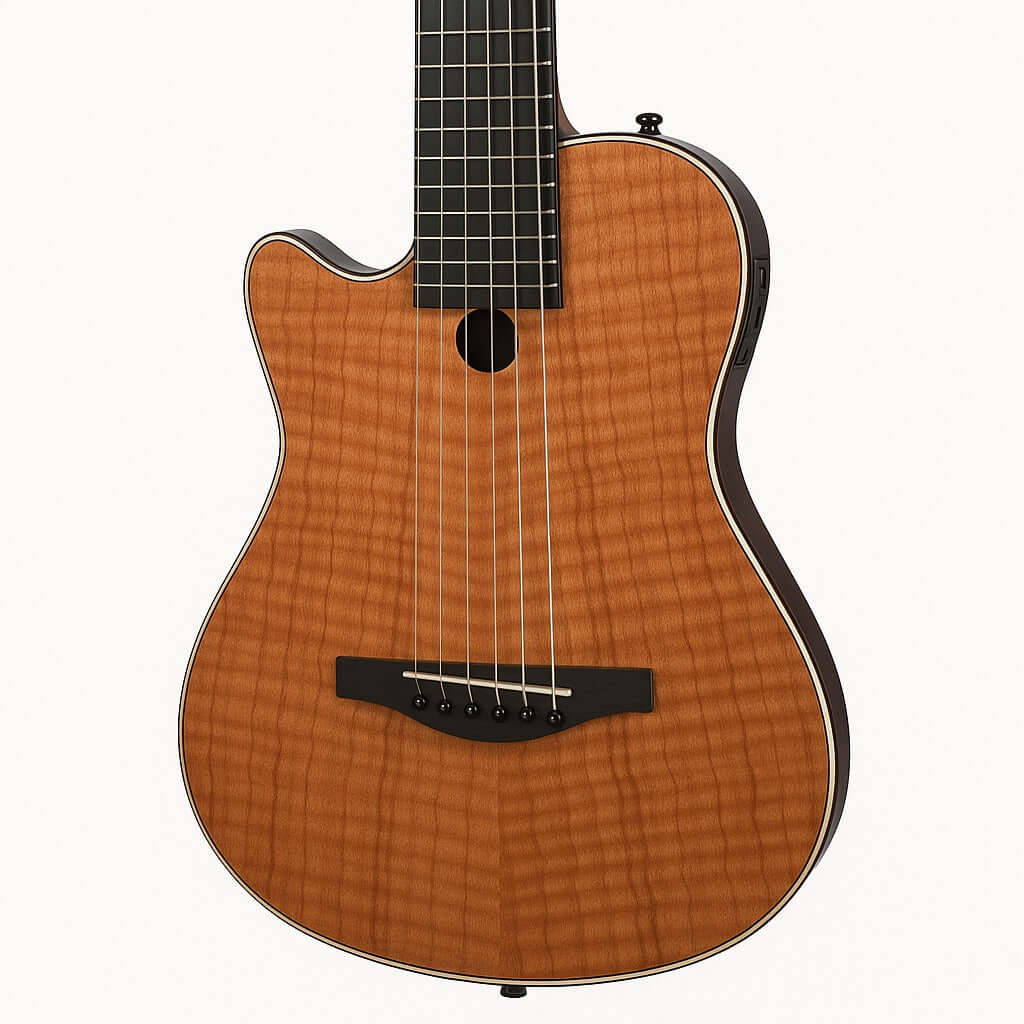
Mythic Phantom ES2 Electric Guitar – Chambered Semi Hollow Body – Flame Maple Top – USA Built
The Mythic Phantom ES2 Electric Guitar features a chambered semi-hollow body and a flame maple top, providing a blend of acoustic warmth and electric clarity. With its versatile design, this guitar is suitable for various playing styles, from rhythm to ambient. The professional-grade expression system allows for comprehensive tone shaping, making it an excellent choice for musicians seeking dynamic sound versatility.
View Product